


Written by: Thula Zondi
At Westville Primary School in Cape Town, change is unfolding in small but powerful moments inside the classroom, driven by young people like 24-year-old Michaela Hendrick.
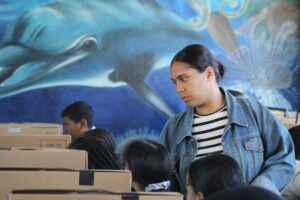
For Michaela, the work is also deeply personal. It is rooted in her desire to be for others what she sometimes needed growing up, someone who shows up, believes in them, and helps them see what they are capable of becoming.
She said: “I didn’t expect to be drawn to a role like this, but seeing the joy and energy it brought to others made me curious. I realised I wanted to be part of creating that same experience for learners, something I didn’t have growing up. More than that, it’s the sense of responsibility and purpose that stays with me: knowing you can help shape a child’s future and support them to do better.”
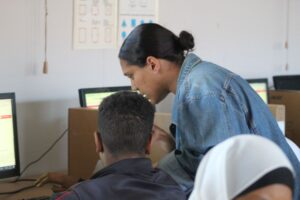
Through the Social Employment Fund (SEF) programme, implemented with The Learning Trust with their implementing partner, Inclusive Education South Africa (IESA), Michaela works around 30 hours a week as a teacher’s assistant. Her role places her at the centre of daily learning support, where she helps learners stay engaged, understand their work, and build confidence in their abilities.
Alongside this contribution, she is also building herself. Each day in the classroom is shaping her skills in communication, classroom management, facilitation and supporting learners with diverse needs. What once felt unfamiliar is now becoming a space where she is growing into confidence and capability, while also exposing and immersing her to an After-School Programme sector that allows her to be an contributing citizen to the good of her community.

“Stepping into the classroom has not only changed my perspective, but shown me how powerful it is to make a real difference in a child’s life,” she says.
Her story reflects what happens when young people are given structured opportunities to learn while working. The impact does not sit in one place. It extends to learners who feel more seen and supported, to classrooms that function with greater care, and to a young woman discovering her own potential.
This is what work can look like when it iia more than income, when it becomes a pathway into confidence, contribution, and long-term possibility.
The question that remains is how to scale these opportunities so that more young people can step into roles where they both learn and lead.
To learn more about The Learning Trust’s work, click here.
Edited by: Yolisa Shugu