


Written by: Thula Zondi
The Social Employment Fund (SEF) Annual In-Person Workshop, convened by the Social Employment network on 6–7 May 2026 at the IDC Head Office in Sandton, brought together Strategic Implementing Partners (SIPs), government representatives, and stakeholders to reflect on the evolving value of the SEF and the pathways it creates for participants.
The first day opened with reflections from the IDC on the progress made across four rounds of the SEF and preparations that are underway for Round 5. A presentation from Ms Mokgadi Matuludi of the Presidential Employment Stimulus unpacked the National framing on pathways across public employment programmes. Her address highlighted the role of public employment as more than short-term opportunity positioning it as a critical stepping stone towards longer-term livelihoods. It also located SEF within the broader employment ecosystem, prompting reflection on how different interventions connect and reinforce one another.
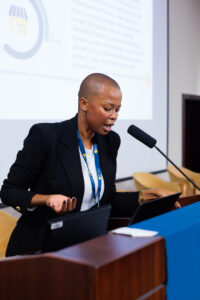
The discussions on the first day focused on how the success of public employment programmes is measured, challenging traditional definitions that centre primarily on employment outcomes. Discussions explored the need to broaden this understanding of success, recognising that pathways and outcomes extend beyond formal employment and include a wider range of social, economic, and livelihood opportunities. Facilitated discussions and a panel of SIPs Inmed, Property Point, Lima and WeThinkCode,unpacked what meaningful participant outcomes look like in practice, while sharing stories of participant growth, unexpected outcomes, and the barriers still facing many communities.
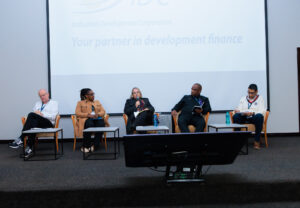
The day concluded with the “Mapping Pathways” exercise, where SIPs worked collaboratively to map participant journeys into employment, entrepreneurship, education, and other livelihood opportunities. The exercise highlighted the diversity and complexity of participant experiences, while surfacing lessons on what enables successful pathways and where stronger support systems are still needed.
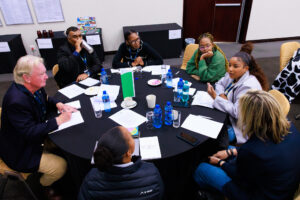
The second day built on these reflections through keynote addresses, discussions on local government and spatial transformation, and conversations on how the network can better support and track participant pathways beyond programme participation.
A SEF participant, Lebo, shared her story and reflected on how the programme shaped her personal and professional journey. “For a person who graduated with a diploma certificate, for years staying at home, but with the support from COC as a supporting NGO… I became one of the supervisors. In my journey, they kept on capacitating me to a point whereby we have 11 farm hubs in Gauteng, we added two in Limpopo and Mpumalanga and I became the coordinator for the programme. Through this programme I also opened a small business that created employment in my community,” she said.
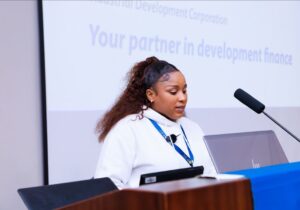
Rian Coetzee, Divisional Executive for Industry Planning and Project Development at the IDC, gave a keynote address and reflected on the scale and impact of the programme, highlighting both its economic and social contribution.
“Since its inception, over 180 000 people have participated in this Social Employment Fund. Many of the participants have never worked before and have been excluded from the economy. However, SEF is not about just work, it is about work that brings dignity, restores confidence and creates pathways into employment, enterprise and strengthens local economies,” he said.
He further added: “Recent data shows that more than half of the participants move into jobs, micro-enterprises or further studies. Our data has shown us that 1 in 4 participants who has worked through SEF for the SIPs will graduate into a pathway.”
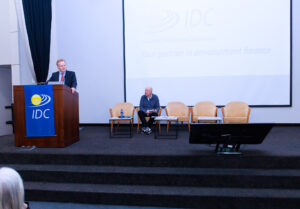
The significance of the collaborative model that has emerged through the SEF partnership between government and civil society is unprecedented. “Through the IDC, DTIC and Presidency, working with all the SIPs here and especially those who have come before, there is a unique model in this country. So thank you all for being part of that and let us all continue to fight for that model, and not let that be diminished in any way,” said Andrew Boraine, partnering and systems change practitioner, and facilitator of the workshop.
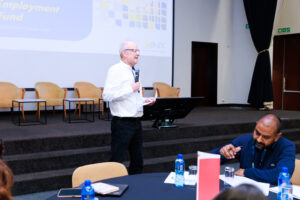
Andrew gave an overview of the latest progress on the Local Government White Paper Review, giving those in attendance an opportunity to begin engaging with some of the thinking and direction behind the process. That conversation raised a lot of interest and reflection, particularly around what this means for civil society organisations and practitioners working directly within communities. Given the significant experience and insights across SEF, it was a valuable opportunity to engage directly with the policy development process and help ensure that the realities emerging from communities inform and enrich the broader policy environment.
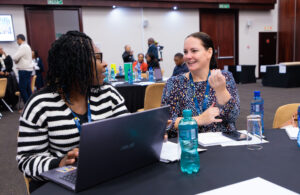
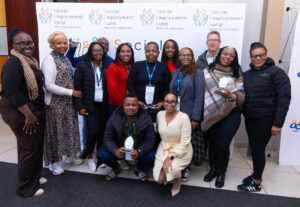
The workshop concluded with a renewed commitment to collaboration, shared learning, and strengthening approaches to participant support and pathway tracking across the network. Across both days, one message remained clear: the value of the SEF extends beyond employment statistics, reaching into the lived realities of participants, communities, and local economies across South Africa.
Reviewed by: Margo le Roux
You can watch day one and two of the event here.